Building an 1100

  • Thread starter Thread starter Rod Nock
  • Start date Start date
R

Rod Nock

Guest
Hey guys, I joined hoping for any tips and to post my progress and pitfalls. I don't own a ZL but am building a ZG1000 with 1st gen GPZ bodywork getting a 2 mm overbore with ZX10 rods and ZZR1100 pistons. Also installing GPZ cams and carbs w/Dynojet stage 3 kit, K&N pod filters (bike came with no airbox), Supertrapp slip-ons, a ZL output bevel, and 4 deg ign advancer. Head mildly ported, valve guides teardropped. At this time I have the rods on and cases together, the cylinders are at the machine shop.

The bike will be dyno tuned, or at least tuned at Houston Raceway Park. I am interested in hearing from anyone who has drag raced ZLs for tips on cam timing and such. Thanks
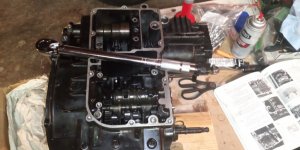
 
Cases together
 

Attachments

  • IMG_20201213_010438.jpg
    IMG_20201213_010438.jpg
    98.9 KB · Views: 21
Way back when...I bought Dale Walkers supertrap slip ons, he sold a fixed timing advance plate +4°. I spoke with him on timing since I had (still have) an adjustable plate for mine. He told me that he experimented and more advanced than the 4 had no real enhancement on performance.
 
The cams and some other internal parts in the big ZL are supposed to be different from the ZX to give it more low end torque. The opposite was done for the 600 motor and no internals were changed from the smaller ZX.
 
OK, so I got the ZG, ZX, and ZL manuals and looked up each cam spec. ZG, and both ZL900 and 1000 have the same opening, closing, duration and lobe angle specs: intake opens at 37.5 deg BTDC and closes at 57.5 deg ATDC. The exhaust is just the opposite, opens at 57.7 deg and closes at 37.5 deg. This yields a duration of 275 deg for both cams and a lobe separation angle of 100 - Better for low end and midrange.
The ZX has different specs: intake opens at 40deg BTDC' closes at 70 deg ATDC; exhaust opens 65 deg BTDC and closes at 45 deg ATDC with a duration of 290 deg and a lobe separation angle of 102.5 deg - better for upper midrange and top end.
I have yet to determine if the cam lift is the same for all these cams, but my study goes on...
 
Just to let you know, many years ago I used to take my ZL to the drag races.
Met a guy who had put zx cams in his ZL. So we agreed to do some runs side by side.
My stockbike would always leave the line harder but he's catch up by the finish line going a fair bit quicker. On several runs we posted almost identical times.
So if you want the power up top, use the ZX cams. If you want all the 'go' low down, stick with std.
 
I would've guessed the stock ZL setup performed better on the street as long as you're average speed is below 100 mph. The ZX600 vs ZL600 had the same results. According to Kawasaki, the ZX600 only makes 1 HP more @ 10500 RPM than the ZL's 74 HP. Peak torque for the ZL is 39.8 ft-lbs @ 8500 RPM, ZX is only 38.3 @ 9000. The ZL has smaller carbs but larger airbox, it's lighter/lower/longer and has a shorter overall gear ratio. If it wasn't for the drag of the driveshaft killing off it's greater RWTQ, the ZL could've held it's lead much longer.
 
Anyone have an idea why Kawasaki lists the ZL1000 with 68 ft-lbs of torque and the ZG1000 with 72 ft-lbs, but both with 110 hp, when they have essentially identical drive trains?
 
:hello: Dynos can differ from one to another. In one of the magazines I seen one dyno run for the ZL 1000 and they clocked 119.73 RHP.
 
The torque quoted was from Kawasaki's own factory engine specifications, taken at the crank, not from a private dynamometer.
 
Different airbox, exhaust, carb parts working with the same cams change the tune. Where it looks like peak torque is down, overall torque might be up. Peak figures are only for bragging rights.
 
The '96 ZL600 is down 13 HP and 6 ft-lbs TQ compared to the '86. The difference is smaller intake valves, restrictive airbox snorkel and mufflers.

I calculated the top speed difference between the '86 ZX and ZL600 (1 HP) if both used chain drive and had similar aerodynamics and it would be less than 1 MPH.
 
According to the cam specs above, the big ZX has it's valve timing retarded 2.5 degrees from center which moves the torque curve up to higher revs and raises HP. Valves hitting the piston are more likely if they float and as the chain wears, timing goes even more retarded. All the 600s have 2.5 degrees advanced cams for more low end torque. I'd like to advance mine another 2.5 for even more. I wouldn't retard it too much to raise HP but taking out the stock advance should be safe. Retarding 5 degrees should also be safe if it doesn't overrev too high.

With the big ZL, it should be safe to retard the stock cams 2.5 degrees. Advancing them 2.5 to 5 degrees should be doable if want more low end. Advancing is always safe since valves won't float when opening. You can even play with lobe separation angle (change valve overlap) with DOHC but with single camshaft engines, advancing and retarding is all you can do. I've heard up to 8 degrees one way or the other is about max. Just check piston to valve clearance.

I found that the Austrian '95 ZL600 only made 42.2 HP @ 10500 RPM and 31 ft-lbs @ 4000 RPM! The only part I found different from the 61.2 HP model was the carburetor slide springs which are superseded to the same spring every other 600 uses. Maybe there's a throttle stop on the carb body or some countries just have smaller horses.
 
Rod Nock, I understand you to write you are boring your ZG1000 block 2mm over and installing ZX-10 pistons. I had read that the ZX-10 had different valve angles and larger valves than the ZG engine. The ZX-10 head also has angled intakes. How are you fitting these disparate pieces together? Are you using aftermarket pistons to reach 1052cc? Do the ZX-10 conrods have larger diameter wrist pins?
 
OK, so I got the ZG, ZX, and ZL manuals and looked up each cam spec. ZG, and both ZL900 and 1000 have the same opening, closing, duration and lobe angle specs: intake opens at 37.5 deg BTDC and closes at 57.5 deg ATDC. The exhaust is just the opposite, opens at 57.7 deg and closes at 37.5 deg. This yields a duration of 275 deg for both cams and a lobe separation angle of 100 - Better for low end and midrange.
The ZX has different specs: intake opens at 40deg BTDC' closes at 70 deg ATDC; exhaust opens 65 deg BTDC and closes at 45 deg ATDC with a duration of 290 deg and a lobe separation angle of 102.5 deg - better for upper midrange and top end.
I have yet to determine if the cam lift is the same for all these cams, but my study goes on...
Sooo...I found the ZL/ZX/ZG Technical Training Manual posted in the ZL750-ZL900-ZL1000 section at the bottom of this site. It states the ZL's have the same camshafts with 8.5mm lift. The ZG and ZX use the same camshaft, both at 9.5mm lift, and with the ZX's retarded 5 deg for more top end. This may account for the different torque figures between the ZL1000 and the ZG1000.
 
Stock ZX1000 is only 2.5 degrees retarded, not 5. Advancing the cams 2.5 from stock would make it centered with timing at 67.5 and 42.5 degrees for both intake and exhaust. Advancing them 5 degrees from stock would make it 2.5 degrees advanced.
 
Last edited:
I see that the ZX1000 intake is 5 degrees retarded compared to the ZX900. If you advance the ZX1000's intake only, to get timing centered, you'll increase valve overlap which is better for top end but if the exhaust system isn't tuned for it you can get reversion back thru the intake at lower RPMs and a loss of power everywhere. Lotsa valve overlap works best with equal length headers and 4 individual open megaphones or at least a non-restrictive exhaust for any kind of gain. Either way, you lose low end with more overlap.

Advancing the exhaust cam only, to get timing centered, will increase torque down low and intake reversion won't be a problem with an untuned exhaust. A slight loss up top and a gain down low can be expected.

So, LESS VALVE OVERLAP raises dynamic compression down low and TOP END EXHAUST TUNING IS LESS CRITICAL while MORE VALVE OVERLAP lowers dynamic compression down low and TOP END EXHAUST TUNING IS MORE CRITICAL if you want gains. Low and mid range torque are usually sacrificed at the expense of high HP and vice versa.

The sprockets are 34T which is 5.3 degrees per tooth and gives you some options without much slotting if any at all. :)
 
Last edited:
Back
Top