Scoobys_piece
Senior Member
Thanks R.J. I'll have to go through and do as instructed....guess my work is cut out for me today, with all the GREAT responses, you'll all were kind enough to post. I'll then post back with my results. The bike's only got 11K on the ode, but I believe the bike has seen alot more outdoor weather, than was told, as the left and right hand control looked very weathered. Oh well, just another thing to keep me off the streets at night. Thanks again. Engine Ice is one slippery substance. You wouldn't think that, but wow, I did the two finger rub test and that stuff is worth it! I don't want to go through the entire flush system yet, as I spent all last season, working on this puppy....and I just want to ride, but I guess I'll have to go through and do as describe. I'll follow the shematic on the wiring harness and get to all the lil connectors and dilectric clean them and grease them....They say, the fastest running horse, will be the first one to kick ya...and that seems evident in this case as well.

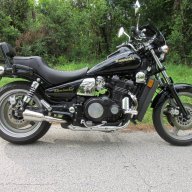
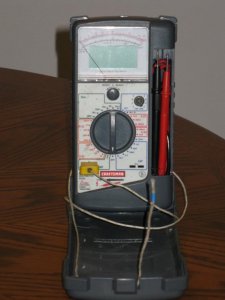
 Scoob, do not worry about any inline resistors, there are none. What ever meter you use if needed do a continuity test on the leads. It should read @ 3 ohms. Also I use the 50/50 mix of vinegar & baking soda to flush all my radiators. You need a 1/2 cup of each for your bike radiator. What I do is I drain it, then put the mixture in then fill it with water. Bring the motor up to temp drain it. Then I do it 2 more times with just water. This I learned from a old school Ford Tech way back in the early 70s. This mixture gets all the slimy feeling out of the system. If it is real bad I run the garden hose through it also. My house water has a reverse osmosis system so I have no chemicals in my tap water. If you do not have a meter buy one with a temperature therm o couple lead. You can stick it inside of the radiator at the cap & re-install the cap & watch the temp. That way if it reaches over 250* you know to shut down the bike. After you get it up & running. Put the lead under the cap. Bring the temp up to 200* then shut the bike off & the fan should come on. Then start the bike up again let it come up to temp until the fan comes on. This should happen between 232* & 240*. You can leave the meter lead under the cap & rest the meter between your legs & test ride it. Your cruising temp should be between 190* & 220*. It all depends on the ambient temp. If the fan does not come on after turning off the bike the small relay under the tank is bad. If the fan does not turn on while the motor is running the large relay is bad. Both relays are under the right side of the tank. They are black & have a rubber protection sleeve over them. They are both still available from Kawasaki for @ $60 for both. Also on the back of the thermal stat housing the rear sensor can be disconnected & grounded to the frame & the fan will come on. Some people put a external switch here, but I do not like to do that because I always forget to turn it on. The cooling system is designed to run at a certain temp for peak performance & motor life. So personally I do not recommend a external switch. There is a way to test each relay in the circuit but I do not remember excellently what the procedure is. I can not find it. My son knows were it is. He found it on the internet but I never printed it out. If I think of anything else I will let you know. The meter I have with the temp setting is from Sears Craftsman Model # 82322. They are China junk so calibrate it by using ice 32*F & boil water 212* F. The first one I bought was off by 12* F.
 I always thought it bled quicker & better if it was done at operating temp. None of my one lunger water cooled bikes have bleeders. I just crack the radiator cap to bleed it like I do on my truck.